Some artists compose melodies. Others build homes inside them.
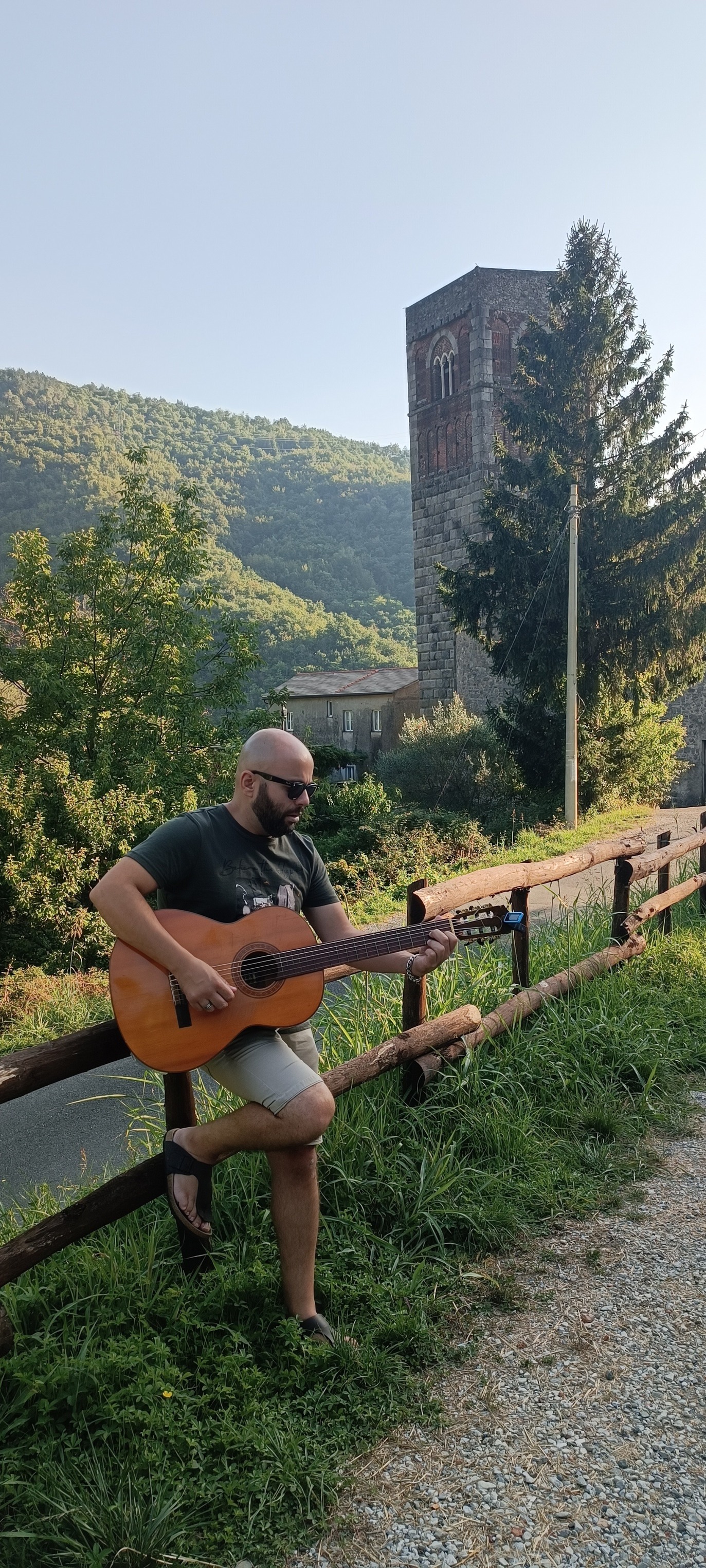
Mauro Caprile is not only a guitarist. He is a listener to place, to time, and to the unspoken resonance between people and the land they come from. His music, as explored in a recent feature by Raighes Factory, unfolds more like topography than storytelling. It does not ask questions or provide answers. It simply exists, like mountains do, or oceans.
Born and rooted in Liguria, Mauro draws from that in-between territory where sea and sky seem to blur into one breath. Yet his creative vision resists the labels of genre or geography. He is not a Mediterranean guitarist. Nor a blues player. Nor a jazz composer. He is all of those things and none of them. What emerges from his fingers, whether on nylon, steel, or electric strings, is music that values space as much as sound. It is work shaped by silence, by memory, and by the stillness that modern life often forgets to offer.
In the Raighes Factory interview, Caprile expresses it with clarity:
“I would like the music I write to be for everyone… I like the idea that whoever listens can make the music their own.”
It is rare, this refusal to instruct the listener. Rare, too, is the humility with which Caprile approaches his own art. For him, music is not performance, but presence. It is something to return to rather than consume. Like the Ligurian hills and coastlines that inspire him, his compositions ask the listener not to look at them but to walk through them, slowly, again and again.
A Guitar Without Hierarchies
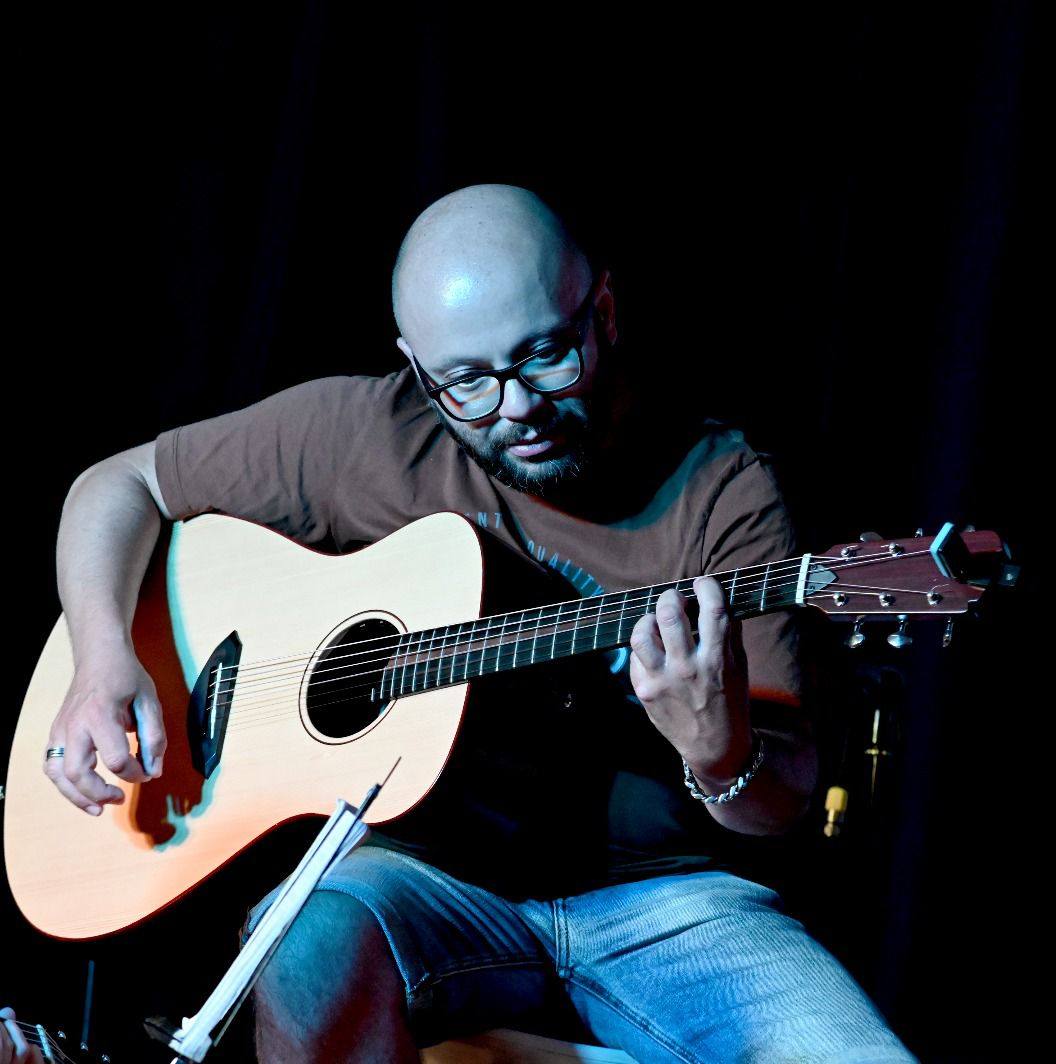
Caprile speaks of the guitar not as a tool of virtuosity, but as a voice, sometimes classical, sometimes electric, sometimes acoustic. Each guitar, he says, appears when needed. What matters most is not the technique or the shine of tone, but the emotional weight carried by each note. There is a certain moral clarity in that approach. A refusal to dazzle, and instead, an embrace of honesty.
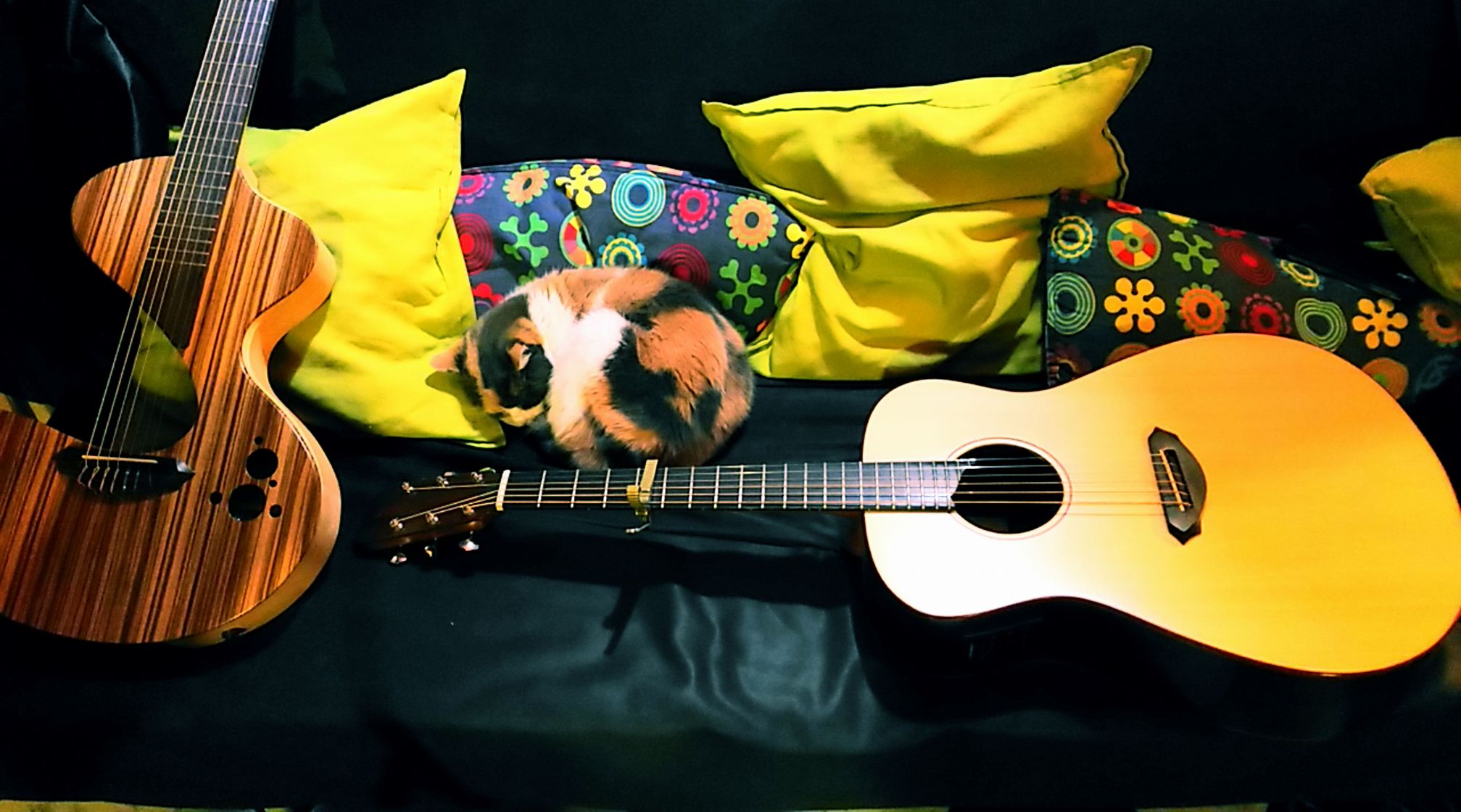
He favors darker tones. Softer edges. Textures that hold back rather than burst forward. When you listen to his catalogue on Raighes Factory, you’ll notice how rarely the guitar tries to take center stage. Instead, it grounds the listener. It invites thought, or stillness, or slow memory.
Liguria as Influence, Not Template
It would be tempting to describe Caprile’s work as landscape music and certainly, there are traces of place throughout his compositions. But the artist is quick to deflect the idea that his music is merely descriptive. Liguria, for him, is not a postcard or a theme. It is a presence. A recurring atmosphere.
As he puts it:
“Between the Mediterranean Sea and the Apennines, I have often found inspiration.”
Yet nowhere in his discography does Liguria feel romanticized. Instead, it whispers. It shows up in pacing, in breath, in the unhurried rhythm of a piece like Three Days Trip, which musically maps out a slow journey through ancient woods, stone churches, and alpine lakes. His Liguria is not touristic. It is lived.
A Music That Listens Back
Caprile’s relationship to genre is inclusive. His inspirations stretch from Jimi Hendrix to Astor Piazzolla, from Chet Baker to Franco Morone, but none of them are cited as models to follow. Instead, he speaks of them as companions in listening artists who taught him how to feel more than how to play.
“In music, I find beautiful and emotional things everywhere, without limits of genre.”
This is an artist who values emotional intelligence over stylistic precision. There’s something deeply human about that. In a world obsessed with categories and charts, Mauro Caprile reminds us that music is not a product to fit a shelf, but a shared space to inhabit, slowly, intentionally, and without apology.
A Label That Understands the Artist
Raighes Factory, the label behind Caprile’s releases, seems uniquely attuned to this kind of artistry. Their philosophy champions not just quality music, but thoughtful music. Music that holds space for solitude and reflection. By supporting artists like Mauro Caprile, they are quietly building an alternative to the noise of fast consumption.
Their message at the end of the Caprile feature says it best:
“Supporting an artist like Mauro Caprile does not mean reacting quickly. It means staying with the music. Returning to it.”
This is not branding. It is an invitation. One that music lovers would do well to accept.
In a time when attention is fleeting and algorithms reward the loudest voice, Mauro Caprile’s music offers a counterpoint. It is the sound of someone paying attention. To place. To time. To emotion. And perhaps most importantly, to the listener’s freedom to find their own meaning inside the sound.
You can explore Mauro Caprile’s work on Raighes Factory. Take your time. His music will wait for you.
 Music Releases