I often think the most honest music is the kind that doesn’t ask for attention, but gently waits for it.
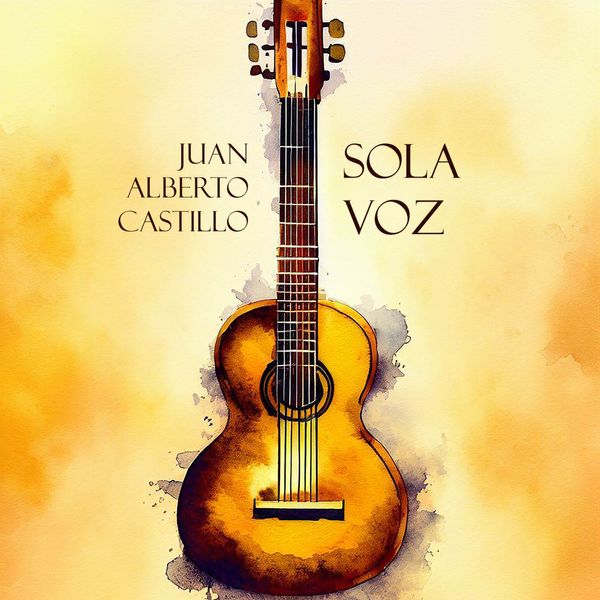
Sola Voz, the 2025 album performed by Juan Alberto Castillo and composed by Carlo Matti, belongs to that rare category. Built entirely around the nylon-string guitar, this record feels less like a collection of pieces and more like a continuous inner space calm, warm, and quietly illuminated.
From the first moments of the album, I was reminded why the solo guitar has such a unique emotional gravity. Without accompaniment, without adornment, every gesture matters. Castillo’s playing embraces that responsibility with humility and care. His tone is rounded and intimate, recalling the lyrical restraint of Andrés Segovia, while his phrasing carries echoes of flamenco tradition in the lineage of Paco de Lucía, though filtered through a meditative, contemporary lens.
Carlo Matti’s compositions draw clearly from classical and flamenco roots, but they never feel bound by them. The influence of composers like Heitor Villa-Lobos and Joaquín Rodrigo can be felt in the melodic clarity and harmonic warmth, yet the language is unmistakably personal. There is also something quietly modern here, ma sensitivity to space and time that reminds me of the contemplative approach found in the works of Leo Brouwer, or even the spiritual stillness associated with composers like Arvo Pärt.
Rather than functioning as isolated statements, the nine tracks of Sola Voz feel like different angles of the same thought. The title piece, “Sola Voz,” establishes the album’s emotional vocabulary: solitude that isn’t lonely, silence that feels inhabited. From there, pieces like “Como el Río” and “Before the Dawn” explore flow and suspension, mirroring natural, rhythms, water, light, breath, without ever becoming descriptive in a literal sense.
Flamenco color enters gently throughout the album, especially in “Awakening” and “De nuevo descubrir,” but always with restraint. This is flamenco remembered rather than performed, internalized rather than projected. The rhythmic pulse is present, but softened, as if heard from another room. That balance between classical clarity and flamenco inflection is one of the album’s defining traits, giving it warmth without urgency.
Time itself becomes a central theme as the album unfolds. “Feeling Time” lingers on repetition and subtle variation, inviting the listener to notice small shifts in harmony and touch. “Alhambra” draws inspiration from place and history, evoking the ancient architecture not through grandeur, but through echo and resonance. It feels like music shaped by stone, shadow, and memory rather than spectacle.
Tracks like “Dice el viento” and the closing “Voice in the Woods” lean further into atmosphere and reflection. Here, the guitar seems to speak in half-phrases and unanswered questions, carried by silence as much as by sound. There’s a sense of nature throughout these pieces, not as scenery, but as presence. Wind, trees, and open air feel implied rather than illustrated.
What I appreciate most about Sola Voz is its consistency of mood. Serene, introspective, tranquil, and warm are not marketing adjectives here; they are structural principles. This album is ideal for meditation, reading, or quiet evenings, but it also rewards deep listening. The more attention you give it, the more you notice the care in Castillo’s touch and the emotional intelligence in Matti’s writing.
In an era where much instrumental music is designed to fill space, Sola Voz does the opposite, it creates space. It feels like a whispered conversation between composer, performer, and listener, where nothing needs to be explained. The guitar speaks alone, and somehow, that is enough.
More information and listening options for Sola Voz can be found via Raighes Factory.
 Music Releases